
Alcohol withdrawal follows a predictable timeline: mild symptoms at 6-12 hours, danger peaks at 24-72 hours when seizures and delirium tremens can occur, and most symptoms resolve by day 5-7. Unlike opioid withdrawal, alcohol withdrawal can be fatal without medical supervision and benzodiazepine medication.
- 1Alcohol withdrawal symptoms begin 6-12 hours after your last drink and peak at 24-72 hours
- 2Seizures and delirium tremens make alcohol withdrawal potentially fatal without medical care
- 3Benzodiazepines like Librium, Ativan, and Valium are the gold standard for safe alcohol detox
- 4Thiamine supplementation prevents Wernicke-Korsakoff syndrome, a serious brain condition
- 5Medical detox with 24/7 monitoring is non-negotiable for heavy drinkers
If you are reading this at 2am because you are scared of what happens when you stop drinking, you are not alone. Alcohol withdrawal is terrifying, and your fear is justified. Unlike most substances, alcohol withdrawal can kill you. But understanding what happens to your body and why medical supervision matters can help you take the next step toward getting safe.
Here is the truth about what alcohol does to your brain and body when you stop, hour by hour.
Why Alcohol Withdrawal Is Different
Your brain adapts to alcohol over time. Alcohol enhances the effects of GABA, a neurotransmitter that calms your nervous system. With chronic heavy drinking, your brain compensates by becoming less sensitive to GABA and more excitable overall.
When you suddenly stop drinking, your brain is left in a hyperexcitable state with no alcohol to calm it down. This is why alcohol withdrawal causes tremors, anxiety, rapid heart rate, and in severe cases, seizures. Your nervous system is essentially in overdrive.
This mechanism is fundamentally different from opioid withdrawal. Opioid withdrawal is miserable. You will feel like you have the worst flu of your life, with muscle aches, nausea, diarrhea, and intense cravings. But opioid withdrawal very rarely kills anyone. Alcohol withdrawal can, and does, kill people who try to stop on their own.
The Alcohol Withdrawal Timeline
Withdrawal follows a predictable pattern, though the severity varies based on how much you drink, how long you have been drinking, and whether you have been through withdrawal before.
6 to 12 Hours After Your Last Drink
The first symptoms often feel like a bad hangover. You may experience:
- Anxiety and restlessness that feels different from your usual anxiety
- Hand tremors that make it hard to hold a cup steady
- Nausea and vomiting
- Sweating even when you are not hot
- Headache
- Insomnia despite feeling exhausted
Many people dismiss these early symptoms or try to push through them. This is a mistake. These symptoms signal that your body is dependent on alcohol and that more severe symptoms may follow.
12 to 24 Hours After Your Last Drink
Symptoms intensify during this window. Your vital signs become unstable:
- Elevated blood pressure and heart rate
- Increased body temperature
- Confusion and difficulty concentrating
- Irritability and mood swings
- Alcoholic hallucinosis in some cases
Alcoholic hallucinosis means you may see, hear, or feel things that are not there. Unlike the hallucinations of delirium tremens, you usually know these are not real. They are disturbing but not immediately dangerous on their own.
24 to 48 Hours: The Danger Zone
This is when alcohol withdrawal becomes life-threatening. The risk of seizures peaks during this period.
Withdrawal seizures are generalized tonic-clonic seizures, the kind where you lose consciousness and your entire body convulses. They can happen without warning, even in people who have never had a seizure before. A single seizure can cause you to fall and hit your head, aspirate vomit, or stop breathing. Multiple seizures in rapid succession, called status epilepticus, is a medical emergency.
This is not fear-mongering. This is why every addiction medicine physician will tell you that heavy drinkers should never attempt to quit cold turkey without medical supervision.
48 to 72 Hours: Peak Risk for Delirium Tremens
Delirium tremens (DTs) is the most severe form of alcohol withdrawal. It affects approximately 3 to 5 percent of people going through withdrawal, typically those with the longest and heaviest drinking histories. DTs usually begin 48 to 72 hours after the last drink.
Symptoms of DTs include:
- Severe confusion and disorientation
- Vivid hallucinations that feel completely real
- Extreme agitation
- Fever
- Profuse sweating
- Dangerous fluctuations in blood pressure and heart rate
- Seizures
Without treatment, delirium tremens has a mortality rate of up to 15 percent. With proper medical care, that rate drops to less than 1 percent. The difference is medical supervision and appropriate medication.
72 Hours to 7 Days: Gradual Improvement
For most people, the worst is over by day 3 or 4. Symptoms begin to subside:
- Tremors decrease
- Sleep begins to improve
- Vital signs stabilize
- Anxiety lessens
- Appetite returns
By day 5 to 7, most acute physical symptoms have resolved. However, some people experience post-acute withdrawal syndrome (PAWS), which can include lingering anxiety, depression, sleep problems, and cravings that persist for weeks or months. This is why ongoing treatment after detox is so important.
Medications That Keep You Safe
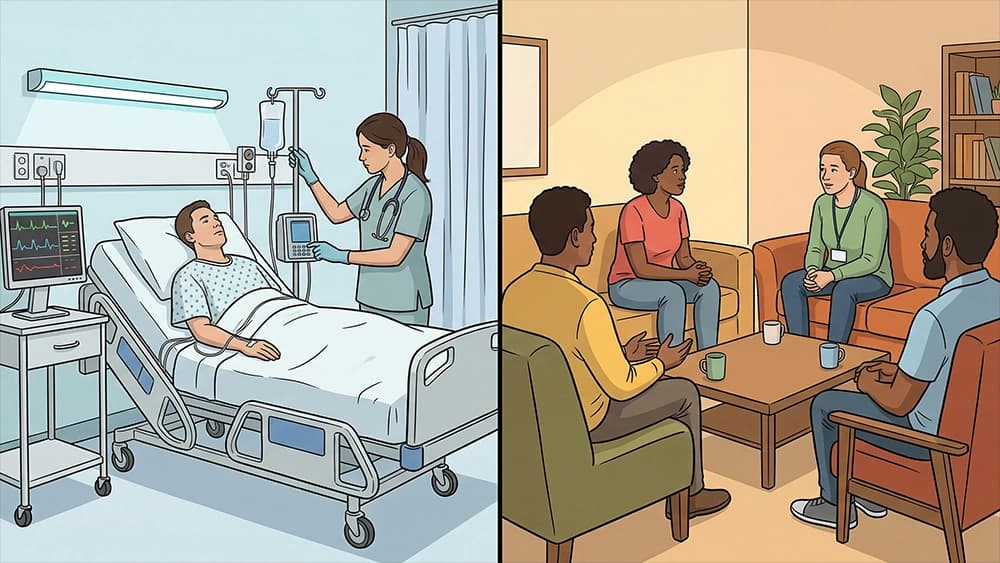
Medical detox is not just about comfort. It is about preventing death. The medications used in alcohol detox directly address the dangerous neurological changes that cause seizures and DTs.
Benzodiazepines: The Gold Standard
Benzodiazepines work on the same GABA receptors that alcohol affects. They calm your hyperexcitable nervous system and prevent seizures. The most commonly used benzodiazepines for alcohol detox are:
- Chlordiazepoxide (Librium) — long-acting, often used for mild to moderate withdrawal
- Diazepam (Valium) — long-acting, effective for preventing seizures
- Lorazepam (Ativan) — shorter-acting, preferred for patients with liver problems
Your medical team will start with a higher dose and gradually taper down over several days as your body stabilizes. This taper is carefully calibrated based on your symptoms and vital signs.
Anti-Seizure Medications
In some cases, particularly if you have a history of withdrawal seizures, doctors may add anti-seizure medications like phenobarbital or carbamazepine for additional protection.
IV Fluids and Electrolytes
Heavy drinkers are often dehydrated and have electrolyte imbalances. IV fluids correct these imbalances and help your body recover more quickly.
Thiamine: Preventing Brain Damage
Thiamine (vitamin B1) supplementation is critical. Chronic alcohol use depletes thiamine, and severe deficiency causes Wernicke-Korsakoff syndrome, a serious brain disorder. Wernicke encephalopathy causes confusion, coordination problems, and eye movement abnormalities. If untreated, it can progress to Korsakoff syndrome, which causes permanent memory impairment.
Thiamine is given intravenously during detox because oral absorption is often impaired in heavy drinkers. This simple intervention can prevent devastating, irreversible brain damage.
Why Medical Detox Is Non-Negotiable
If you drink heavily every day, medical detox is not optional. It is not about willpower or toughness. Your brain chemistry has changed, and stopping abruptly can trigger a medical emergency.
At Surf City Detox, our medical team monitors your vital signs around the clock during the critical first 72 hours. We adjust your medication protocol based on how you are responding, using standardized assessment tools to measure withdrawal severity. If complications arise, we intervene immediately.
You will not be alone. You will not be suffering unnecessarily. And you will be safe.
Take the First Step
If you have been putting off getting help because you are afraid of withdrawal, we understand. But the longer you wait, the more your body depends on alcohol, and the more dangerous withdrawal becomes.
You can do this. But you need medical support to do it safely.
Call Surf City Detox at (714) 248-9760 anytime, day or night. Our team is ready to answer your questions and help you take the first step toward freedom from alcohol.
This article is for informational purposes only and does not constitute medical advice. If you are experiencing symptoms of alcohol withdrawal, seek medical attention immediately.
Frequently Asked Questions
How long does alcohol withdrawal last?
Acute alcohol withdrawal typically lasts 5 to 7 days. Symptoms begin 6 to 12 hours after your last drink, peak between 24 and 72 hours, and gradually improve. Some people experience post-acute withdrawal symptoms like anxiety and sleep problems for weeks or months afterward.
Can you die from alcohol withdrawal?
Yes. Alcohol withdrawal is one of the few types of withdrawal that can be fatal. Seizures can occur suddenly and cause death or serious injury. Delirium tremens has a mortality rate of up to 15 percent without treatment. This is why medical detox is essential for heavy drinkers.
What medications are used for alcohol detox?
Benzodiazepines are the primary treatment. Common options include chlordiazepoxide (Librium), lorazepam (Ativan), and diazepam (Valium). These prevent seizures and calm the nervous system. Doctors also provide thiamine, IV fluids, and anti-seizure medications if needed.
Why is alcohol withdrawal more dangerous than opioid withdrawal?
Alcohol affects GABA receptors in the brain. When you stop drinking, your nervous system becomes hyperexcitable, which can trigger seizures. Opioid withdrawal is extremely uncomfortable but rarely life-threatening. Alcohol and benzodiazepine withdrawal can kill without proper medical management.
How do I get help for alcohol detox?
Call Surf City Detox at (714) 248-9760 for a confidential assessment. Our medical team provides 24/7 monitoring and medication management throughout the withdrawal process. We can often begin intake the same day you call. Do not attempt to detox from alcohol alone.
Sources & References
This article is based on peer-reviewed research and authoritative medical sources.
- Alcohol Withdrawal Syndrome — National Library of Medicine - StatPearls (2024)
- Recognition and Management of Withdrawal Delirium (Delirium Tremens) — New England Journal of Medicine (2014)
- Treatment of Alcohol Withdrawal — American Academy of Family Physicians (2004)
- Wernicke-Korsakoff Syndrome — National Institute of Neurological Disorders and Stroke (2024)
Surf City Detox
Surf City Detox Medical Team