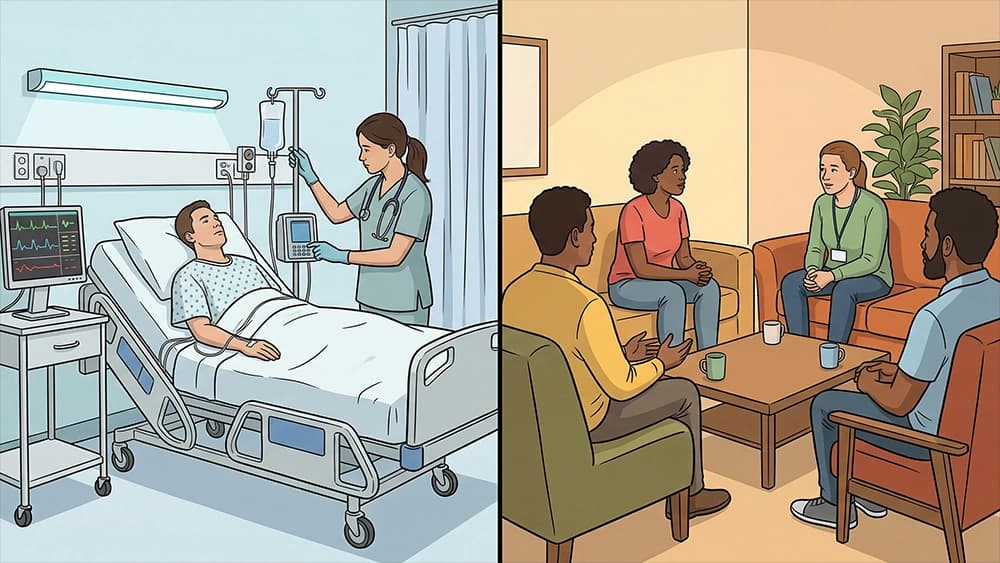

Heroin withdrawal often starts within hours, peaks in the first few days, and improves over about a week. Medical detox helps manage symptoms, monitor complications, and connect people to ongoing treatment.
- 1Withdrawal from heroin often begins within 6 to 12 hours after the last use and is usually most intense during the first 2 to 4 days.
- 2Heroin withdrawal is rarely fatal on its own, but dehydration, severe distress, and relapse risk can make supervised care an important safety step.
- 3Medical detox can provide monitoring, symptom relief, and medication planning during acute withdrawal.
- 4The exact timeline varies based on fentanyl exposure, amount used, duration of use, and overall health.
- 5Detox is the first stage of care, and ongoing treatment improves the chances of stable recovery.
A heroin withdrawal timeline can move quickly. For many people, symptoms begin the same day as the last use, and the hardest stretch arrives before they have had much sleep, food, or hydration. That pace is one reason opioid detox can feel overwhelming without medical support.
At Surf City Detox in Huntington Beach, the clinical team regularly helps patients prepare for the first week of opioid withdrawal with a plan for monitoring, symptom management, and next-step treatment. Understanding what commonly happens day by day can reduce uncertainty and make it easier to choose safe care.

How Long Heroin Withdrawal Usually Lasts
People often ask, how long does heroin withdrawal last, because the symptoms can feel intense very early. Heroin is a short-acting opioid, so withdrawal usually starts faster than withdrawal from long-acting opioids. A review of opioid detoxification literature notes that heroin withdrawal symptoms generally begin within 6 to 24 hours, peak within 24 to 48 hours, and resolve over about 5 to 10 days (NCBI review).
That range is a useful baseline, not a promise. In current clinical settings, timing can vary when the drug supply includes fentanyl or other substances, when a person has been using heavily for a long time, or when there are co-occurring medical and mental health conditions.
What Changes the Timeline?
No two detox experiences are identical. The withdrawal timeline is shaped by several clinical factors, and these differences matter when planning safe monitoring.
- Frequency and amount of opioid use: Higher tolerance often means more severe early symptoms.
- Fentanyl exposure: Illicit heroin may contain fentanyl, which can change onset, intensity, or treatment response.
- Other substances used: Benzodiazepines, alcohol, stimulants, or prescription medications can complicate withdrawal and increase risk.
- Prior detox history: Repeated withdrawal episodes may affect how symptoms are experienced and managed.
- General health status: Dehydration, sleep deprivation, chronic pain, and gastrointestinal issues can make symptoms harder to tolerate.
Because of that variability, a clinical assessment matters as much as the calendar. A detox program can evaluate vital signs, substance use patterns, and immediate risks before symptoms fully peak. Surf City Detox provides medical detox services through a structured detox program with 24/7 clinical supervision during this phase.
Day-by-Day Heroin Withdrawal Guide
The outline below reflects common patterns seen with short-acting opioid withdrawal. It is not a substitute for a personal medical assessment, but it can help set expectations for what the first week may look like.
Day 0 to Day 1 (6-12 Hours After Last Use): Early Withdrawal Starts
Early symptoms often begin as the opioid effect wears off. People may notice anxiety, restlessness, sweating, yawning, tearing, runny nose, goosebumps, and muscle aches. Cravings can begin before other symptoms are fully noticeable.
This stage is frequently mistaken for a bad flu or severe anxiety spike, especially when the person is trying to push through at home. Sleep can become difficult almost immediately, which makes the next phase feel harder.
Day 1 to Day 3 (24-72 Hours): Peak Symptoms for Many People
For many patients, this is the most difficult part of acute withdrawal. Symptoms can intensify into abdominal cramping, nausea, vomiting, diarrhea, chills, dilated pupils, elevated heart rate, significant body pain, and pronounced insomnia. Anxiety and agitation can rise alongside cravings.
Although opioid withdrawal is often described as less medically dangerous than alcohol or benzodiazepine withdrawal, the distress can still create real complications. Repeated vomiting and diarrhea can cause dehydration, and severe discomfort increases the risk of returning to opioid use quickly. If tolerance has dropped even slightly, relapse can increase overdose risk.
Day 3 to Day 5: Symptoms Begin to Ease, but Sleep and Cravings Persist
After the peak, many people start to see gradual improvement in gastrointestinal symptoms and body aches. Appetite may begin to return, but fatigue is common. Sleep is often still poor, and people may feel emotionally raw, irritable, or depressed.
This is also a common point where people think they are "through it" and stop treatment planning. Clinically, this is exactly when transition work matters, because cravings can remain strong while motivation and energy fluctuate.
Day 5 to Day 7 (and Sometimes Longer): Acute Withdrawal Winds Down
By the end of the first week, many acute symptoms are improving, though some patients continue to have insomnia, low mood, restlessness, or cravings. The answer to how long does heroin withdrawal last is often "about a week for the acute phase, but longer for sleep and craving symptoms."
The first week is only the opening chapter. Ongoing support, medication treatment planning, and behavioral care can make the difference between a short detox stay and a durable recovery plan.
What Medical Detox Does During the First Week
A supervised detox setting does more than "watch and wait." It creates a controlled environment where symptoms are monitored, hydration is supported, and treatment decisions can be made safely as the withdrawal pattern becomes clear.
According to StatPearls, opioid withdrawal management commonly includes symptom-based care and may involve medications such as methadone or buprenorphine depending on clinical circumstances, along with supportive treatment for gastrointestinal and autonomic symptoms (NCBI Bookshelf). In practice, the team also monitors for co-occurring risks, including alcohol or benzodiazepine withdrawal, which can require a different level of medical response.
During a typical admission, the first steps often include:
- A nursing and medical assessment, including substance use history and recent last use
- Vital-sign monitoring and symptom tracking over time
- Hydration, nutrition support, and sleep-oriented comfort strategies
- Medication planning when clinically appropriate
- Coordination for the next level of care after acute detox
For patients who need more structure after detox, transitioning into residential treatment after withdrawal stabilization can help maintain momentum. People seeking longer-term opioid-focused recovery planning can also review heroin addiction treatment options as part of the next-step conversation.
Home Withdrawal vs Medical Detox: A Practical Comparison
People deciding what to do next are often comparing two realities: trying to stop at home versus entering a supervised detox program. The difference is not just comfort. It is also about whether symptoms are being observed, documented, and treated in real time as the pattern unfolds.
At home, the first challenge is usually timing. Symptoms can start while someone is still trying to work, care for family, or hide what is happening. That makes hydration, rest, and symptom tracking inconsistent. By the time vomiting, diarrhea, or severe agitation peak, the person may already be exhausted and more likely to return to opioid use just to stop the symptoms.
In medical detox, the early phase is handled more proactively. Staff can monitor vital signs, respond to symptom changes, and adjust support based on what is actually happening that hour rather than what the person remembers later. This matters because withdrawal severity can escalate faster than expected, especially when fentanyl exposure or polysubstance use is involved.
A second difference is transition planning. Home withdrawal often ends with a person feeling depleted and unsure what to do next. A structured detox admission can use that same window to set up follow-up treatment, discuss medication options, and coordinate a safe handoff instead of leaving the next step to chance.
When to Seek Immediate Professional Help
Some signs should not be managed alone. Medical evaluation is especially important when opioid withdrawal is happening alongside other substances or significant health conditions.
Seek urgent professional support if there is:
- Persistent vomiting or diarrhea with inability to keep fluids down
- Confusion, fainting, chest pain, or severe shortness of breath
- Suicidal thoughts, panic that feels unmanageable, or severe agitation
- Recent heavy use of alcohol or benzodiazepines in addition to opioids
- Pregnancy, a serious medical condition, or a history of complicated withdrawal
A practical scenario seen in detox settings is a person who plans to stop heroin at home, but by day two they are exhausted, dehydrated, and using again just to stop the symptoms. Early intervention can interrupt that cycle and give the person a safer landing point.
Planning for What Comes After Detox
Detox addresses acute withdrawal, but it does not treat the full substance use disorder by itself. Once the most intense symptoms settle, the focus shifts to relapse prevention, therapy, and medication planning when appropriate.
A strong discharge plan usually includes follow-up appointments, a clear treatment recommendation, and support for logistics such as transportation, work communication, and family involvement. Keeping that plan simple and realistic is often more effective than building an ideal plan that is hard to follow once someone leaves detox.
Compassionate Next Steps in Huntington Beach
Taking action during opioid withdrawal can feel difficult, especially when symptoms are already building. Surf City Detox in Huntington Beach provides medically supervised detox and individualized treatment planning designed to help people move through the acute phase safely and connect to ongoing care.
Call (714) 248-9760 to speak with an admissions counselor, or verify your insurance coverage to review treatment options and next steps.
This content is for informational purposes only and does not constitute medical advice. Please consult a qualified healthcare professional for personalized guidance.
Frequently Asked Questions
How long does heroin withdrawal last?
Acute heroin withdrawal commonly starts within hours of the last use, becomes most intense over the next few days, and improves over about 5 to 7 days. Sleep disruption, cravings, and mood symptoms can continue longer, especially without ongoing treatment support.
When does heroin withdrawal start after the last dose?
For short-acting opioids like heroin, symptoms often begin within 6 to 12 hours after the last use. The exact timing can shift depending on fentanyl exposure, metabolism, and whether other substances such as benzodiazepines or alcohol are involved.
What are the worst days of heroin withdrawal?
Many people describe days 2 through 4 as the hardest part of acute withdrawal because symptoms like body aches, nausea, diarrhea, anxiety, insomnia, and cravings can peak. Medical detox can help reduce distress and monitor hydration and vital signs.
Can heroin withdrawal be managed at home?
Some people attempt withdrawal at home, but symptoms can escalate quickly and relapse risk is high when discomfort peaks. A supervised setting is often safer when there is heavy opioid use, other substances involved, or a history of overdose or medical problems.
Where can I get help for heroin withdrawal in Huntington Beach?
Surf City Detox in Huntington Beach can help assess heroin withdrawal symptoms and discuss medically supervised detox options. Call (714) 248-9760 to speak with an admissions team member, or start by reviewing insurance coverage and next-step planning.
Sources & References
This article is based on peer-reviewed research and authoritative medical sources.
- Pharmacologic Treatments for Opioid Dependence: Detoxification and Maintenance Options — Dialogues in Clinical Neuroscience / NCBI (2010)
- Opioid Withdrawal — StatPearls / NCBI Bookshelf (2025)
Surf City Detox
Surf City Detox Medical Team