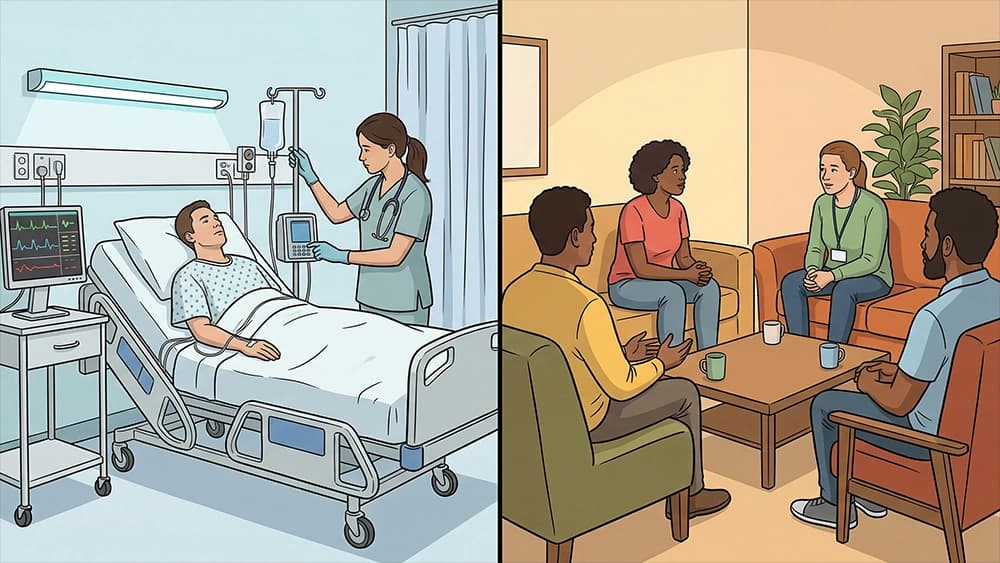

A benzo detox timeline varies by medication, dose, and duration of use. Medical detox uses monitoring and gradual tapering to reduce withdrawal risk and keep symptoms manageable.
- 1A benzo detox timeline is not one-size-fits-all and often extends beyond the first week.
- 2Short-acting and long-acting benzodiazepines can produce different withdrawal patterns and durations.
- 3Medical detox focuses on safe tapering, symptom relief, and monitoring for complications.
- 4Mixing benzodiazepines with opioids or other depressants raises overdose risk and requires added caution.
- 5A clear transition plan after detox helps stabilize sleep, anxiety, and long-term recovery goals.
A benzo detox timeline can feel unpredictable, especially when symptoms begin to shift. In Huntington Beach, Surf City Detox helps people plan each week of withdrawal with medical monitoring, a gradual taper, and clear expectations. The primary goal is safety and stabilization, not rushing the process.
What a benzo detox timeline actually measures
The timeline is less about a fixed calendar and more about how the nervous system recalibrates after long-term benzodiazepine use. Most protocols track three things: symptom intensity, functional stability (sleep, appetite, anxiety), and clinical safety markers such as blood pressure and heart rate. These measures guide pacing more than any single “day count.”
A medical team may also track medication half-life, prior dose changes, and whether other sedatives are in the mix. Those factors influence how quickly symptoms appear and how long they persist. That is why a benzo detox timeline varies even among people taking the same medication.
Intake and assessment set the pace
The detox timeline starts with a clinical assessment, not the first reduction. Teams review the specific benzodiazepine, total daily dose, length of use, and any recent dose changes. They also document sleep patterns, panic symptoms, and past withdrawal experiences, which can predict how a person will tolerate a taper.
This initial snapshot shapes the pacing plan. Someone who has used a higher dose for a long period may need smaller dose reductions with longer pauses. Another person who has already tapered partway may only need a brief stabilization period before a slower final reduction.
Why withdrawal length varies so widely
Three factors usually drive the largest differences in how long benzo withdrawal lasts.
- Medication type and half-life. Short-acting benzodiazepines often trigger earlier symptoms, while longer-acting medications can lead to a slower build and longer taper.
- Dose and duration of use. Higher doses or months to years of continuous use typically require slower reductions.
- Co-occurring conditions. Anxiety disorders, insomnia, and other medical issues can magnify symptoms and extend recovery time.
MedlinePlus notes that withdrawal symptoms from certain benzodiazepines can last for weeks and, in some cases, longer than 12 months, which is why gradual dose reduction is standard practice. NIH MedlinePlus
Other individual factors can stretch or compress the timeline. Older adults may metabolize medications more slowly, while people with liver disease may have delayed clearance. Prior attempts to stop, especially abrupt stops, can also make symptoms more volatile during a new taper.
Common symptoms and what they mean clinically
Symptoms are not just discomfort signals; they guide clinical decisions about pacing. Common patterns include:
- Anxiety and agitation: A sign to slow down and reinforce coping strategies and sleep hygiene.
- Insomnia: Often the symptom that persists longest, so stabilization is a priority before further dose reductions.
- Tremor or muscle tension: Can indicate increased autonomic activation that needs closer monitoring.
- Sensory sensitivity: Light and sound sensitivity may appear as the nervous system readjusts.
- Cognitive fog: Difficulty concentrating or short-term memory issues can signal the need for a steadier taper.
- Gastrointestinal changes: Nausea or appetite shifts are common and are monitored alongside hydration.
These symptoms can appear at different points in the benzo detox timeline, which is why daily check-ins are used rather than a single fixed schedule.
Week-by-week expectations during benzo detox
These week ranges are approximate and are used only to frame the process. Clinicians adjust the schedule based on how a person is responding.
Week 1: Early stabilization
The first week focuses on safe reduction and monitoring. Sleep disruption, increased anxiety, and irritability are common. Clinical staff often use a slow taper plan and track vitals several times per day.
Intake findings are reviewed here in real time. If symptoms rise quickly, the team may hold the dose steady for a brief period before moving to the next step. This careful pacing is often the difference between a tolerable first week and one that feels overwhelming.
Weeks 2–4: Symptom shifts and pacing
In weeks two through four, symptoms may fluctuate rather than steadily improve. The taper continues in small steps, with adjustments for sleep and anxiety support. This period is when many people ask, “how long does benzo withdrawal last?” because progress can feel uneven.
Weeks 4 and beyond: Consolidation and recovery planning
By the later phase, many people experience clearer windows between symptoms, while others still have persistent issues such as sleep disturbance or heightened stress responses. Clinicians may extend the taper, especially after long-term use, and introduce structured therapy or skills training to support stability. This is also when expectations are reset around how long does benzo withdrawal last for a specific medication and history, rather than a generic timeline.
Why medical detox matters for safety
Abrupt stopping can cause severe symptoms, including seizures, which is why medical detox is considered the safest option for benzodiazepine dependence. MedlinePlus specifically warns that withdrawal can be serious and prolonged, reinforcing the need for medical oversight and gradual dose reductions. NIH MedlinePlus
At Surf City Detox, the team focuses on controlled tapering, monitoring, and symptom relief. This approach aligns with what is known about benzodiazepine withdrawal: stabilization improves when changes are gradual and clinically supervised. Learn more about what medical detox includes at our detox program.
How clinicians structure a safer taper
A taper plan usually reduces doses in small, timed steps to avoid large drops in GABA activity. Depending on the medication, clinicians may transition to a longer-acting agent and then reduce gradually. The plan is adjusted based on daily symptoms, sleep quality, and any co-occurring conditions.
This clinical pacing is one reason a benzo detox timeline is measured in weeks rather than days. It keeps the process tolerable while protecting against severe withdrawal reactions.
What medical monitoring looks like day to day
Medical detox includes structured monitoring that goes beyond symptom checklists. Clinicians track sleep, appetite, hydration, and vital signs across the day, and they reassess safety risk if symptoms intensify. Adjustments may include slowing the taper, providing non-addictive sleep support, or introducing short-term anxiety management strategies.
Equally important is communication. Clear explanations of what is normal, what is not, and what will happen next reduce uncertainty and support engagement with care. A transparent plan helps people stick with a gradual taper even when symptoms are uncomfortable.
Support strategies that reduce symptom burden
Detox is not only about medication changes. Supportive care helps the nervous system stabilize and keeps symptoms from spiraling. Common clinical supports include structured sleep routines, hydration checks, balanced nutrition, and relaxation skills that reduce agitation without adding sedating medications.
Therapeutic support also matters. Brief, practical counseling can help manage anticipatory anxiety and insomnia, while grounding exercises and breathing techniques are used to reduce acute stress. These supports do not replace tapering, but they make the process more tolerable and safer over time.
When taper adjustments are needed
Taper schedules are designed to be flexible. If a person develops escalating anxiety, persistent insomnia, or significant vital sign changes, clinicians may pause reductions or step back to the previous dose for stabilization. This is not a setback; it is part of a safety-first approach.
Adjustments are also common when co-occurring conditions flare. A stable taper requires stabilizing sleep, mood, and daily functioning before the next reduction. This individualized pacing is a core reason the benzo detox timeline looks different from person to person.
Risks when benzodiazepines are combined with other depressants
Benzodiazepines and opioids both suppress breathing, and using them together increases overdose risk. The National Institute on Drug Abuse highlights the danger of combining opioids with benzodiazepines and other central nervous system depressants. NIDA
For people who have used multiple substances, detox planning needs extra clinical oversight. A careful assessment also helps determine whether longer stabilization is needed before a full taper continues.
Planning the next step after detox
Detox addresses withdrawal, but recovery often requires ongoing treatment for anxiety, sleep, and relapse prevention. Surf City Detox can coordinate next-step planning, including treatment for benzodiazepine use disorder and outpatient or residential referrals when needed.
Post-detox care often focuses on rebuilding daily stability. Consistent sleep schedules, structured therapy appointments, and gradual return to work or family routines help protect the progress made during detox. People who have used benzodiazepines for a long time often benefit from continued anxiety management strategies to prevent rebound symptoms.
A clear transition plan also reduces uncertainty about how long does benzo withdrawal last after detox. While acute symptoms may ease, it is common for sleep or stress sensitivity to linger. Continued clinical support helps track these patterns and adjust care before they become relapse risks.
A supportive next step in Huntington Beach
If you or a loved one is navigating benzodiazepine withdrawal, support is available. Call (714) 248-9760 to speak with an admissions counselor, or verify your insurance coverage in minutes. A calm, medically supervised plan can make the benzo detox timeline more predictable and safer.
This content is for informational purposes only and does not constitute medical advice. Please consult a qualified healthcare professional for personalized guidance.
Frequently Asked Questions
How long does a benzo detox timeline usually last?
Most people experience an early withdrawal phase in the first weeks, but the overall benzo detox timeline can extend longer depending on the medication, dose, and length of use. Some individuals have lingering symptoms that persist for months, which is why clinicians emphasize gradual tapering and close monitoring.
How long does benzo withdrawal last for long-acting medications?
For long-acting benzodiazepines, symptoms may build more slowly and last longer, with some people reporting weeks to months of withdrawal effects. This is why tapering is usually preferred over abrupt stopping and why detox plans are individualized to the specific medication and history.
What symptoms are most common during benzo detox?
Common symptoms include anxiety, sleep disruption, tremor, and cognitive fog, with some people experiencing heightened sensitivity to light or sound. Symptom intensity can fluctuate, so clinical teams track vital signs, sleep, and mood while adjusting the taper and supportive care.
Is benzo detox dangerous without medical supervision?
It can be. Abrupt discontinuation can trigger severe withdrawal symptoms, including seizures, especially after long-term use. Medical supervision provides monitoring, rapid response to complications, and careful dose reductions to lower risk.
When should I call Surf City Detox about benzodiazepine withdrawal?
If you are worried about dependence, withdrawal symptoms, or mixing benzodiazepines with other substances, it is worth getting a clinical assessment. Call (714) 248-9760 to speak with an admissions counselor about safe options and next steps.
Sources & References
This article is based on peer-reviewed research and authoritative medical sources.
- Chlordiazepoxide: MedlinePlus Drug Information — NIH MedlinePlus (2021)
- Benzodiazepines and Opioids — National Institute on Drug Abuse (2022)
Surf City Detox
Surf City Detox Medical Team