Benzodiazepine withdrawal is more medically dangerous than opioid withdrawal because sudden cessation causes CNS hyperexcitability, seizures, and potentially death. Safe benzo detox requires a slow medical taper under 24/7 supervision, often switching to a long-acting benzodiazepine first. Never attempt benzo detox at home.
- 1Benzodiazepine withdrawal can cause fatal seizures, making it more dangerous than opioid withdrawal
- 2Benzos suppress GABA receptors and sudden cessation triggers dangerous CNS hyperexcitability
- 3Short-acting benzos like Xanax produce more intense withdrawal while long-acting benzos like Valium allow a safer taper
- 4Protracted withdrawal syndrome can cause anxiety, insomnia, and cognitive issues for months after stopping
- 5Medical detox with 24/7 monitoring and a structured taper protocol is the only safe way to stop benzodiazepines
Benzodiazepine withdrawal is widely considered the most dangerous type of drug detox in medicine. While opioid withdrawal gets more attention in the media, the medical reality is that stopping benzodiazepines can kill you. Seizures, psychosis, and cardiovascular collapse are real risks that make unsupervised benzo detox genuinely life-threatening.
If you or someone you love is dependent on Xanax, Valium, Klonopin, or Ativan, understanding why benzo withdrawal is so dangerous is the first step toward getting safe help. At Surf City Detox, our medical team manages benzodiazepine detox every day with careful taper protocols and around-the-clock monitoring. Here is what you need to know.
Why Is Benzo Withdrawal More Dangerous Than Opioid Withdrawal?
The answer lies in how benzodiazepines affect your brain. Benzos work by enhancing the activity of GABA (gamma-aminobutyric acid), the brain's primary inhibitory neurotransmitter. GABA essentially calms neural activity. When you take benzos regularly, your brain adapts by downregulating its own GABA production and increasing excitatory signals to compensate.
When you suddenly stop taking benzodiazepines, that artificial GABA enhancement disappears. But your brain has already reduced its natural calming mechanisms. The result is CNS hyperexcitability, a state where your nervous system is firing without the brakes. This is what causes seizures, tremors, extreme anxiety, and in severe cases, death.
Opioid withdrawal, by contrast, is brutally uncomfortable but rarely fatal. You will feel like you have the worst flu of your life, but your brain is not at risk of uncontrolled electrical storms. Benzo withdrawal is in the same danger category as alcohol withdrawal because both substances affect GABA receptors.
The Benzo Withdrawal Timeline: What to Expect
The withdrawal timeline varies dramatically depending on which benzodiazepine you are taking. The key factor is the drug's half-life, which determines how quickly it leaves your system.
Short-Acting Benzos (Xanax, Ativan)
Short-acting benzodiazepines like alprazolam (Xanax) and lorazepam (Ativan) produce the most rapid and intense withdrawal. Symptoms can begin within 6 to 8 hours after the last dose and peak within 1 to 3 days.
The experience is fast and brutal. Patients often describe waves of severe anxiety, insomnia, muscle tension, tremors, and a feeling of impending doom. The seizure risk is highest during the peak withdrawal period, typically within the first 72 hours.
Long-Acting Benzos (Valium, Librium)
Long-acting benzodiazepines like diazepam (Valium) and chlordiazepoxide (Librium) have a more gradual withdrawal onset. Symptoms may not appear for 2 to 7 days after the last dose because the drug leaves the body more slowly.
While the withdrawal is still medically serious, the longer timeline means the symptoms are generally less intense at any given point. This is exactly why long-acting benzos are used as part of the taper protocol.
General Timeline
- Days 1-3: Anxiety, insomnia, irritability, increased heart rate, sweating, tremors
- Days 4-7: Peak severity for short-acting benzos. Seizure risk is highest. Possible hallucinations, panic attacks, muscle pain
- Weeks 2-4: Acute symptoms gradually subside with proper tapering. Ongoing anxiety, sleep disturbances, difficulty concentrating
- Months 1-6+: Protracted withdrawal syndrome may develop with lingering symptoms
The Taper Protocol: How Medical Detox Works
Benzodiazepine detox is never cold turkey. This cannot be stated strongly enough. Abruptly stopping benzos after prolonged use is one of the most dangerous things you can do medically. Safe benzo detox always involves a slow, structured taper under medical supervision.
Here is how the taper process typically works:
Step 1: Switch to a Long-Acting Benzodiazepine
If you are taking a short-acting benzo like Xanax, your medical team will first convert you to an equivalent dose of a long-acting benzodiazepine such as diazepam (Valium) or chlordiazepoxide (Librium). Long-acting formulations provide more stable blood levels, which reduces the intensity of withdrawal and lowers seizure risk.
Step 2: Gradual Dose Reduction
Once stabilized on the long-acting benzo, your doctor will begin reducing the dose in small increments. A typical reduction schedule cuts the dose by 5 to 25 percent at regular intervals, usually every one to two weeks. The speed of the taper depends on how long you have been taking benzos, your current dose, and how your body responds.
Step 3: Monitoring and Adjustment
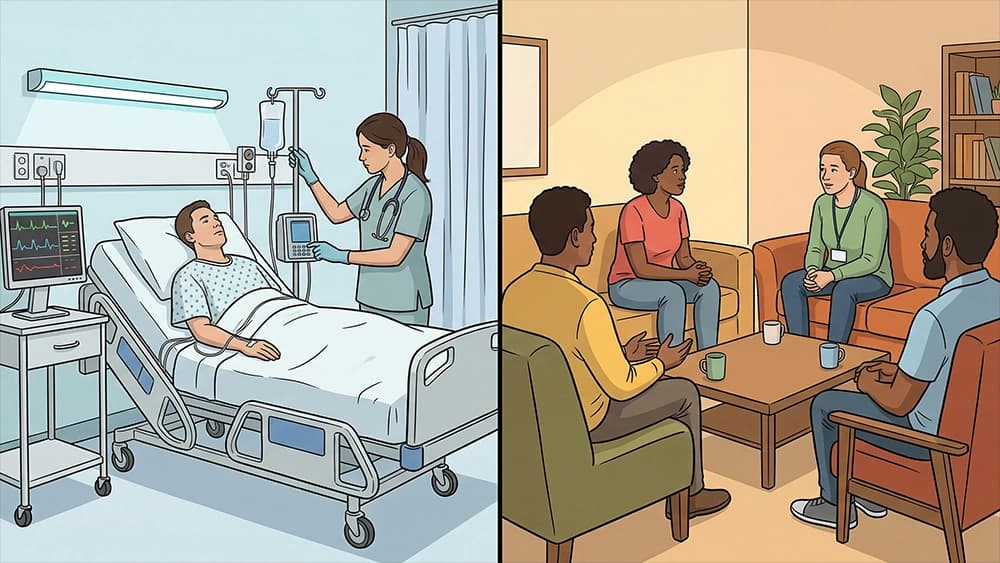
Throughout the taper, medical staff monitor your vital signs, assess withdrawal severity using standardized scales, and adjust the protocol as needed. If symptoms become too severe, the taper can be slowed or briefly paused. This is why 24/7 medical monitoring is essential. Your body's response is unpredictable, and the protocol must adapt in real time.
Supportive Medications
In addition to the taper itself, your care team may prescribe:
- Anticonvulsants such as carbamazepine or gabapentin for additional seizure protection
- Sleep aids for the severe insomnia that accompanies benzo withdrawal
- Anti-anxiety medications that do not affect GABA receptors
- Blood pressure medications like clonidine to manage autonomic symptoms
Protracted Withdrawal Syndrome: The Long Road
Even after completing a taper, many people experience protracted withdrawal syndrome (PAWS), which can persist for months or even longer. This is one of the most challenging aspects of benzo recovery and one that many people are not prepared for.
Protracted withdrawal symptoms include:
- Persistent anxiety that comes in waves, sometimes severe
- Insomnia and sleep fragmentation that resist normal interventions
- Cognitive difficulties including memory problems, brain fog, and difficulty concentrating
- Sensory hypersensitivity to light, sound, and touch
- Depersonalization or feeling disconnected from reality
- Muscle tension and pain without clear physical cause
These symptoms are real and neurological. Your brain is slowly rebuilding its natural GABA function, and that process takes time. Understanding that protracted withdrawal is a recognized medical condition helps patients push through without relapsing.
Why DIY Benzo Detox at Home Is Life-Threatening
We understand why people want to handle this on their own. The stigma of seeking treatment, the cost concerns, the fear of being away from home. But attempting benzodiazepine detox without medical supervision is genuinely one of the most dangerous decisions you can make.
Seizures can occur without warning. Grand mal seizures during benzo withdrawal can happen even if you have never had a seizure before. Without emergency medical care available immediately, a seizure can cause traumatic injury, brain damage, or death.
You cannot taper yourself safely. Cutting pills into smaller pieces is not a medical taper. Without proper monitoring, you have no way to assess your withdrawal severity or know when you are in the danger zone.
The discomfort drives relapse. Without medication management, the anxiety and insomnia of benzo withdrawal become unbearable. Most people who try to quit at home end up taking their medication again just to function, which only deepens the dependence.
Why Surf City Detox for Benzodiazepine Withdrawal
At Surf City Detox in Huntington Beach, California, our physicians have extensive experience managing benzodiazepine detox safely. We provide 24/7 medical monitoring with individualized taper protocols designed around your specific situation.
Our approach includes:
- Comprehensive medical assessment to determine the safest taper strategy
- Continuous vital signs monitoring to catch warning signs early
- Personalized medication protocols adjusted in real time based on your response
- Comfort-focused care that addresses the full spectrum of withdrawal symptoms
- Seamless transition to residential treatment when your detox is complete
Benzodiazepine dependence does not mean you are weak or broken. These medications change your brain chemistry, and getting off them safely requires medical expertise. That is exactly what we provide.
Take the First Step Toward Safe Recovery
If you are trapped in a cycle of benzodiazepine dependence, please do not try to stop on your own. The risks are too serious and the solution is available right now.
Call Surf City Detox at (714) 248-9760 for a confidential assessment. Our team is available 24/7, we accept most insurance plans, and we can often begin the intake process the same day you call.
You deserve to be free from dependence. Let us help you get there safely.
This article is for informational purposes only and does not constitute medical advice. Always consult with a healthcare provider for personalized recommendations regarding benzodiazepine detox and addiction treatment.
Frequently Asked Questions
Why is benzo withdrawal more dangerous than opioid withdrawal?
Benzodiazepines suppress the central nervous system through GABA receptors. When you stop suddenly, the brain becomes hyperexcitable, which can trigger grand mal seizures, psychosis, and death. Opioid withdrawal is intensely uncomfortable but rarely fatal. Benzo withdrawal requires medical supervision to be safe.
How long does benzodiazepine withdrawal last?
Acute benzo withdrawal typically lasts 1 to 4 weeks depending on the specific drug. Short-acting benzos like Xanax cause symptoms within 6 to 8 hours. Long-acting benzos like Valium may not produce symptoms for several days. Protracted withdrawal can persist for months with lingering anxiety, insomnia, and cognitive difficulties.
Can you die from benzo withdrawal?
Yes. Abruptly stopping benzodiazepines after prolonged use can cause fatal grand mal seizures, status epilepticus, and severe autonomic instability. The risk increases with higher doses, longer use, and short-acting formulations like alprazolam. This is why medical detox with a gradual taper is essential.
What is a benzo taper protocol?
A benzo taper involves gradually reducing the dose over weeks or months under medical supervision. Doctors often switch patients from a short-acting benzo like Xanax to a longer-acting one like Valium or Librium, then slowly reduce the dose by 5 to 25 percent at scheduled intervals to prevent seizures.
How can I get help for benzodiazepine dependence?
Call Surf City Detox at (714) 248-9760 for a confidential assessment. Our medical team specializes in safe benzodiazepine detox with 24/7 monitoring and individualized taper protocols. We accept most insurance and can often start the intake process the same day.
Sources & References
This article is based on peer-reviewed research and authoritative medical sources.
- Management of Benzodiazepine Misuse and Dependence — Australian Prescriber / National Library of Medicine (2015)
- Benzodiazepines — Drug Enforcement Administration (2024)
- The Benzodiazepine Withdrawal Syndrome — Addiction Journal / National Library of Medicine (1994)
- Protracted Withdrawal — SAMHSA (2024)
Surf City Detox
Surf City Detox Medical Team