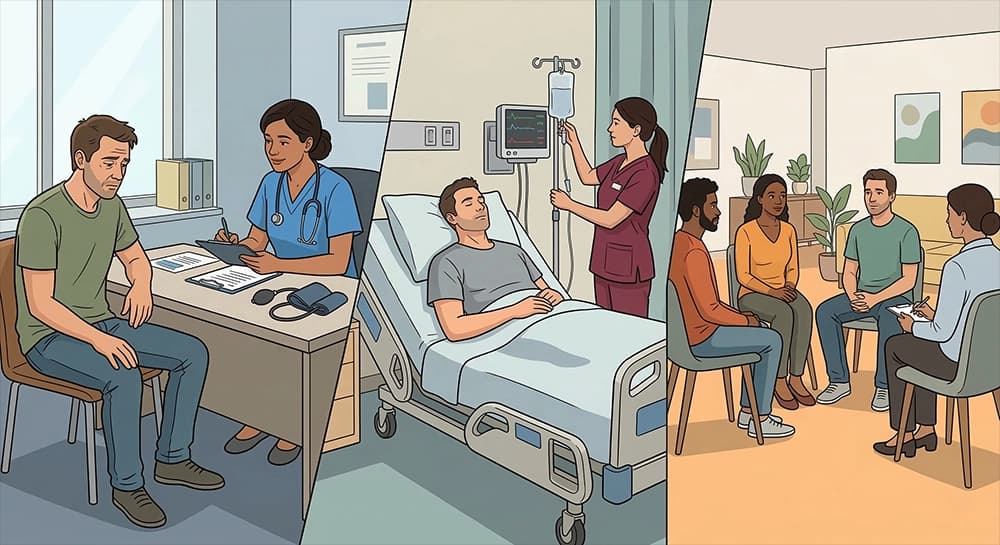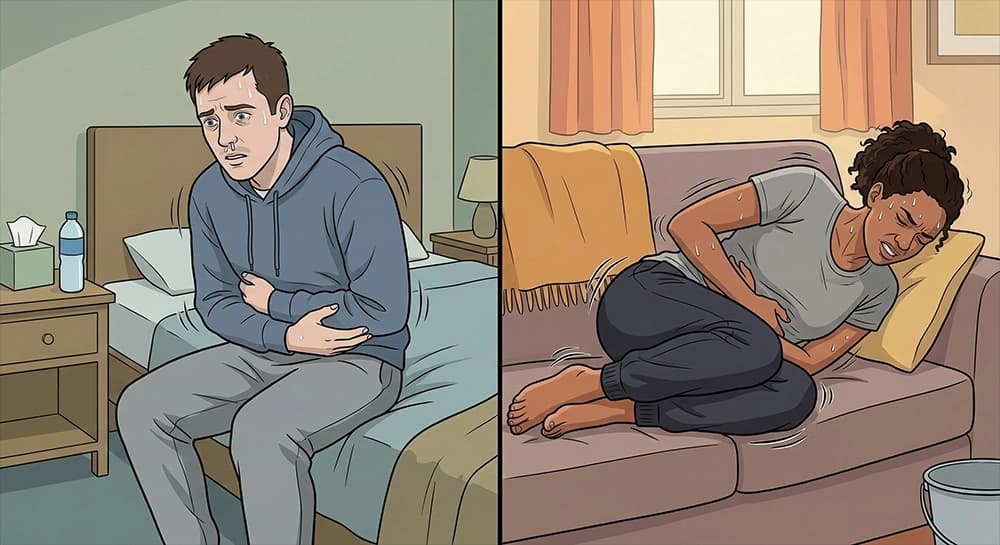
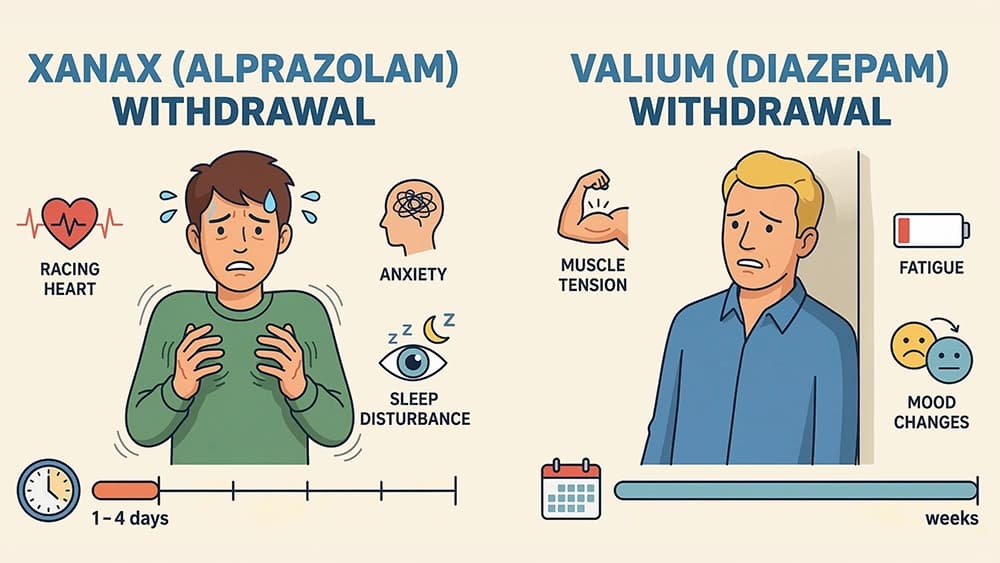
Xanax withdrawal tends to begin faster and produce more intense acute symptoms because of its short half-life, while Valium withdrawal has a slower, more gradual onset due to its longer duration of action. Both require medical supervision, and understanding these differences helps guide safer detox and taper planning.
- 1Xanax has a short half-life, which means withdrawal symptoms can begin within hours and peak more intensely than with longer-acting benzodiazepines.
- 2Valium's long half-life produces a more gradual withdrawal onset, but the total withdrawal duration may extend over a longer period.
- 3Seizure risk exists with both medications, which is why medical supervision during benzodiazepine detox is essential regardless of the specific drug.
- 4Many clinical taper protocols convert short-acting benzodiazepines like Xanax to a longer-acting equivalent like Valium to create a smoother withdrawal curve.
- 5Individual withdrawal experiences depend on dose, duration of use, metabolism, and whether other substances are involved.
In Huntington Beach, people seeking help for benzodiazepine dependence often want to understand what withdrawal will look like for the specific medication they have been taking. The comparison between Xanax vs Valium withdrawal is one of the most common questions because these two drugs are widely prescribed, frequently misused, and produce withdrawal experiences that differ in timing, intensity, and clinical management.
The core difference comes down to duration of action. How quickly a benzodiazepine leaves the body determines how fast withdrawal begins, how sharply symptoms intensify, and how detox teams structure taper protocols.
How does duration of action affect withdrawal?
Benzodiazepines are classified by how long they remain active in the body. This pharmacologic property has a direct impact on the withdrawal profile.
- Xanax (alprazolam): Short-acting with a half-life of approximately 6 to 12 hours. Blood levels drop quickly, which means the brain experiences a rapid reduction in the drug's effect.
- Valium (diazepam): Long-acting with a half-life of 20 to 100 hours when active metabolites are included. Blood levels decline slowly, allowing the brain more time to adjust.
This distinction matters because withdrawal severity is closely tied to how abruptly the drug's effect diminishes. A rapid decline produces more intense early symptoms. A gradual decline produces a slower, more diffuse onset.
NIDA notes that benzodiazepine dependence risk increases with potency and duration of use, and withdrawal management should account for the specific medication's pharmacology.
At Surf City Detox, benzodiazepine detox programs account for the specific drug involved when designing taper and monitoring plans.
What does Xanax withdrawal look like?
Xanax withdrawal is often described as more acute and intense in its early phase compared to longer-acting benzodiazepines. The short half-life means the body begins to feel the absence of the drug within hours.
Timeline
- 6 to 12 hours after last dose: Early symptoms begin, including rebound anxiety, restlessness, and difficulty concentrating
- Days 1 to 4: Peak withdrawal intensity with possible panic attacks, tremor, muscle tension, insomnia, and heightened sensory sensitivity
- Days 5 to 14: Gradual improvement of acute symptoms, though anxiety and sleep disruption often persist
- Weeks 3 and beyond: Post-acute symptoms may continue, including mood instability, cognitive fog, and intermittent anxiety spikes
The rapid onset of Xanax withdrawal is clinically significant because it compresses the most dangerous period into a narrow window. Seizure risk is highest during the first few days, which is why medical monitoring during this phase is essential.
People who have taken higher doses or used Xanax for longer periods tend to experience more severe and prolonged withdrawal. Prior withdrawal episodes can also increase severity through a process known as kindling.
What does Valium withdrawal look like?
Valium withdrawal develops more slowly because the drug and its active metabolites remain in the body longer. This produces a different symptom trajectory.
Timeline
- 24 to 48 hours after last dose: Symptoms may not appear until a full day or more has passed, with early signs including mild anxiety, muscle stiffness, and sleep changes
- Days 4 to 7: Symptoms gradually intensify but rarely reach the sharp peak seen with short-acting benzodiazepines
- Weeks 2 to 4: Peak discomfort may not arrive until the second or third week, followed by a slow resolution
- Weeks 4 and beyond: Post-acute symptoms can persist, particularly sleep disruption and anxiety, though often at lower intensity than Xanax post-acute symptoms
The longer timeline can be misleading. People sometimes assume that delayed onset means milder withdrawal, but Valium withdrawal still carries seizure risk and can produce significant distress, especially after long-term use at higher doses.
The advantage of Valium's pharmacology is that its gradual decline gives clinical teams more time to assess and respond. The disadvantage is that the total withdrawal duration is longer, requiring patience and sustained clinical support.
Why is the seizure risk important for both medications?
Seizures are the most medically serious withdrawal complication for any benzodiazepine, and they can occur with both Xanax and Valium. The mechanism is the same: when the brain's inhibitory signaling suddenly decreases, excitatory activity can spike to levels that trigger seizure activity.
Risk factors for withdrawal seizures include:
- Abrupt discontinuation rather than gradual taper
- Higher baseline dose and longer duration of use
- History of prior withdrawal seizures
- Concurrent alcohol use, which compounds inhibitory system disruption
- Use of multiple benzodiazepines or sedatives simultaneously
SAMHSA guidance in TIP 45 classifies benzodiazepine withdrawal as a medical situation requiring supervised management, particularly when doses are high or use has been prolonged.
Medical detox programs provide seizure precautions, symptom scoring, and immediate intervention capacity that cannot be replicated at home.
How do taper strategies differ?
One of the most common clinical approaches for benzodiazepine detox involves converting short-acting medications to a longer-acting equivalent and then tapering gradually.
Xanax-to-Valium conversion
Many protocols convert a patient's Xanax dose to an equivalent Valium dose and then reduce the Valium gradually over days to weeks. This approach takes advantage of Valium's smoother pharmacokinetic profile to create a more tolerable taper.
Benefits of this strategy include:
- Reduced interdose withdrawal symptoms that occur between Xanax doses
- More predictable blood levels that allow steadier dose reductions
- Lower peak-to-trough fluctuation, which reduces seizure risk during the taper
Direct Xanax taper
In some cases, clinicians taper Xanax directly rather than converting. This may be appropriate for people on low doses or those who have been using Xanax for a shorter period. Direct tapers require closer monitoring because each dose reduction produces a faster change in blood levels.
Valium taper
People already taking Valium are typically tapered on Valium itself. The schedule is adjusted based on symptom response, with reductions slowed or paused if withdrawal symptoms become too intense. Tapering Valium is generally more straightforward than tapering Xanax because the drug's long half-life creates a natural buffer.
What role does individual history play?
Withdrawal severity is not determined by the medication alone. Dose, duration of use, co-occurring substance use, pre-existing mental health conditions, and individual metabolism all influence the experience.
Clinical assessment at intake evaluates these factors to design a taper plan that reflects the person's actual risk, not just the medication name. Residential treatment provides the controlled environment needed for safe benzodiazepine taper management.
What questions should you ask about benzodiazepine detox?
When evaluating programs, ask whether the team uses conversion-to-Valium taper protocols for short-acting benzodiazepines, how taper reductions are paced, what seizure precautions are in place, and how co-occurring anxiety is managed during withdrawal. Programs that answer these questions with clinical specificity are better equipped to manage benzodiazepine detox safely.
The differences between Xanax and Valium withdrawal shape the entire clinical approach to detox. Call Surf City Detox at (714) 248-9760 to discuss your situation and learn about medically supervised benzodiazepine detox, or visit our admissions page to start the process.
This content is for informational purposes only and does not constitute medical advice. Please consult a qualified healthcare professional for personalized guidance.
Frequently Asked Questions
Why does Xanax withdrawal start faster than Valium withdrawal?
Xanax (alprazolam) has a half-life of roughly 6 to 12 hours, meaning blood levels drop quickly after the last dose. This rapid decline triggers withdrawal symptoms sooner, often within 6 to 12 hours. Valium (diazepam) has a half-life of 20 to 100 hours including active metabolites, so blood levels taper more gradually and withdrawal onset is delayed.
Is Xanax withdrawal more dangerous than Valium withdrawal?
Both carry serious risks including seizures. However, the abrupt onset and intensity of Xanax withdrawal can be harder to manage without medical support. The rapid drop in blood levels increases the risk of rebound anxiety, panic, and seizure activity. Medical detox is recommended for both, but short-acting benzodiazepine withdrawal often requires closer monitoring during the first 72 hours.
Why do doctors switch patients from Xanax to Valium during detox?
Converting from Xanax to an equivalent dose of Valium allows clinicians to use Valium's longer half-life to create a smoother, more controlled taper. This strategy reduces the sharp drops in blood concentration that trigger intense withdrawal symptoms and makes dose reductions more gradual and tolerable.
How long does benzodiazepine withdrawal last?
Acute withdrawal from Xanax may peak within one to four days and improve over one to two weeks. Valium withdrawal may not peak until the second week and can extend for several weeks. Post-acute withdrawal symptoms like anxiety, sleep disruption, and cognitive fog can persist for weeks to months with either medication depending on use history.
How do I start benzodiazepine detox at Surf City Detox?
Call Surf City Detox at (714) 248-9760 to discuss your benzodiazepine use history, current dose, and any other health concerns. The admissions team can explain the detox process, review insurance options, and help plan a safe admission timeline.
Sources & References
This article is based on peer-reviewed research and authoritative medical sources.
- Benzodiazepines and Opioids — NIDA (2024)
- TIP 45: Detoxification and Substance Abuse Treatment — SAMHSA (2015)
- Benzodiazepine Use, Misuse, and Abuse — NCBI / PMC (2023)
Surf City Detox
Surf City Detox Medical Team